
What Is an Agency Ad Account? (2026 Guide)
An agency ad account is the reason some advertisers never seem to get slowed down by a ban, a review delay, or a spending cap — while everyone else is stuck refreshing Ads Manager waiting for an appeal to clear.
If you've ever asked a media buyer how they're running $50,000 a month on a brand-new product with zero account history, the answer is almost always the same: they aren't running it on a personal account.
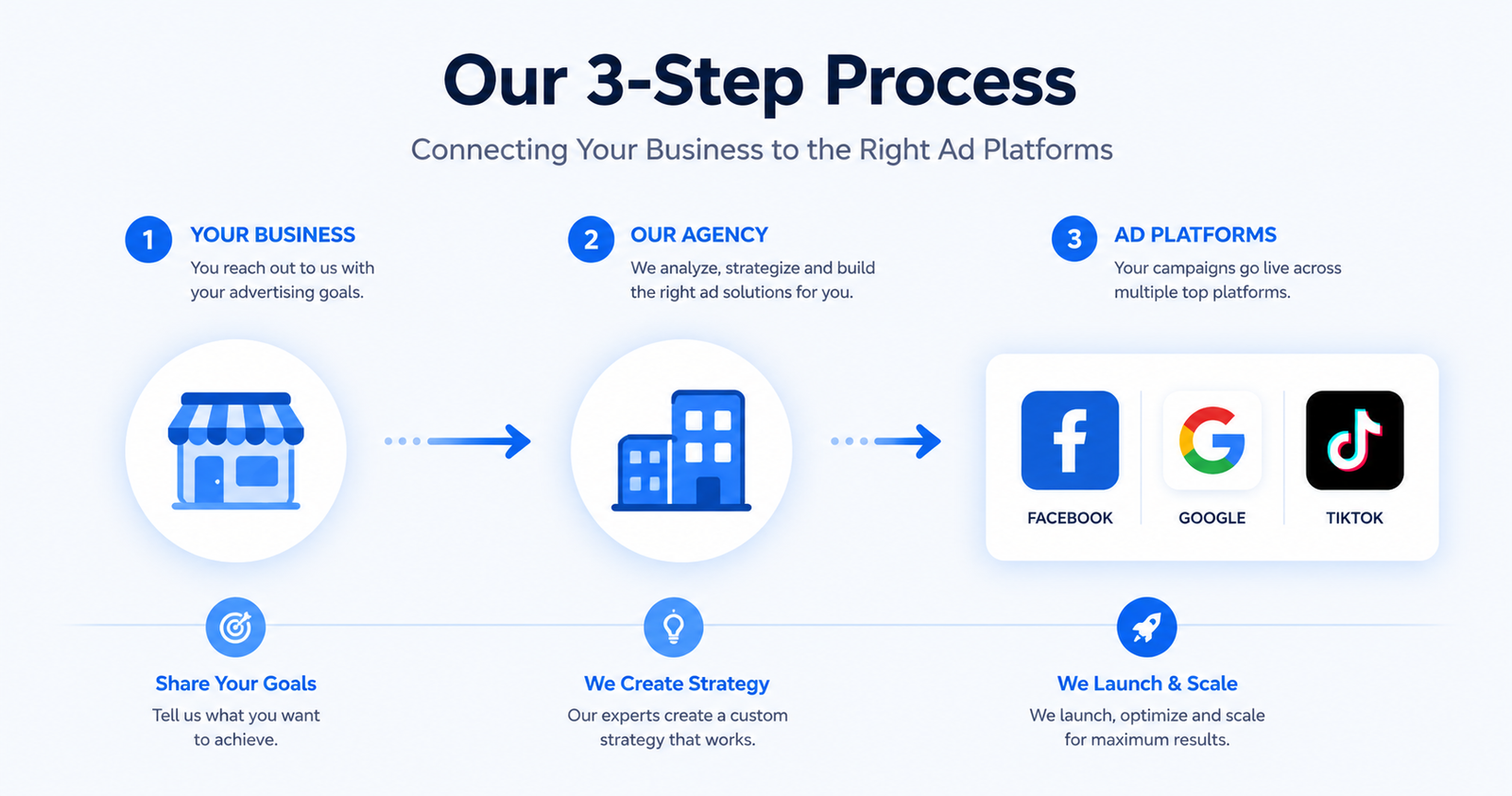
This type of account sits on infrastructure that platforms like Meta, Google, and TikTok already trust — infrastructure built by verified partners, not a single individual's personal profile.
That trust is exactly what makes the difference between an account that survives a policy sweep and one that gets frozen overnight.
This guide breaks down what this setup actually is, how it's structured behind the scenes, why it behaves differently from a personal account, and how to tell a legitimate agency ad account provider from one that's just renting you risk.
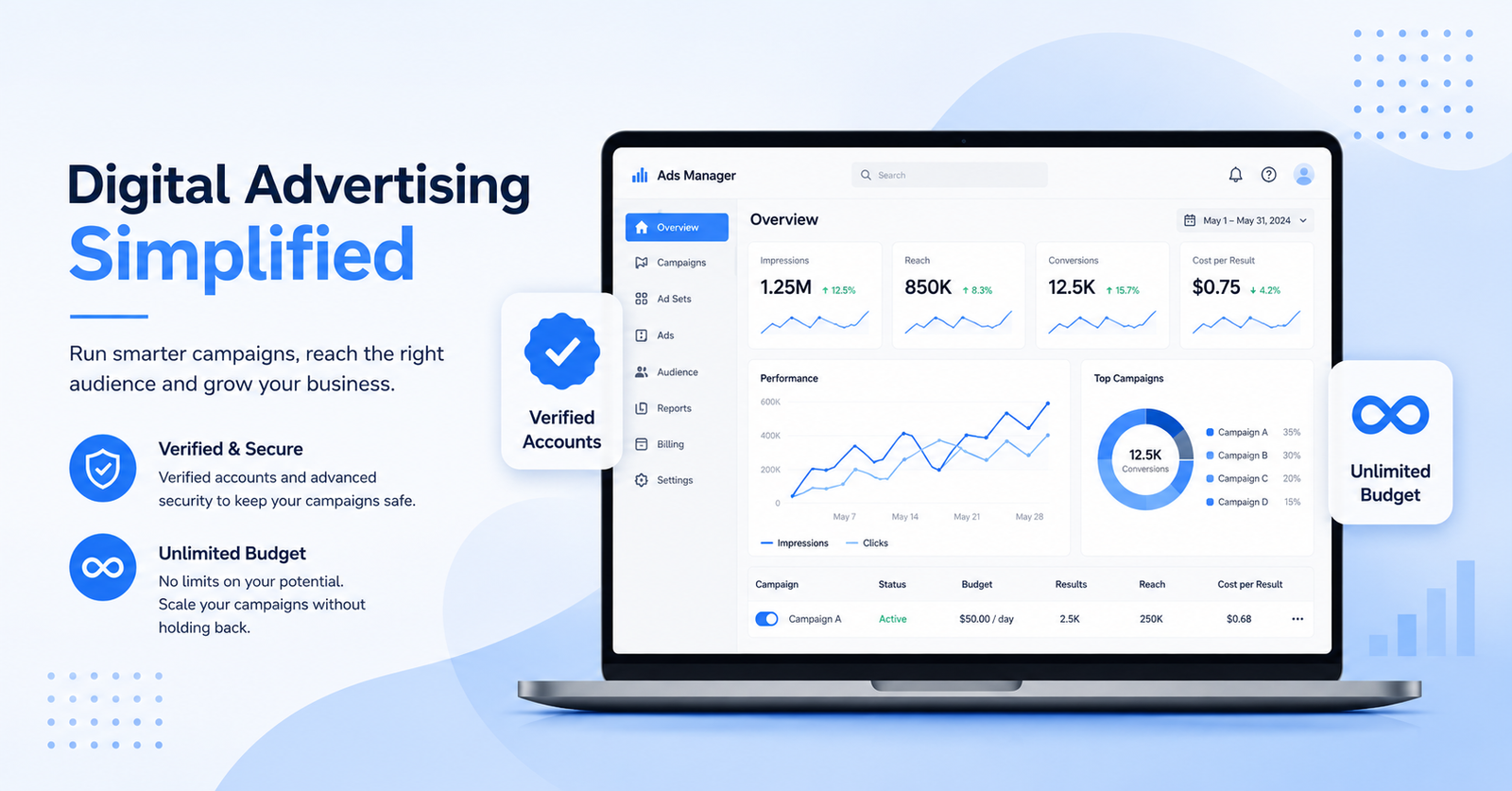
Tired of Getting Capped on Spend?
See how a Vnox Media agency ad account removes the limits a personal account runs into.
Quick Key Stats
Before we get into definitions, here's the practical picture advertisers usually care about most when they're deciding whether an agency ad account is worth the switch.
These figures reflect patterns reported across agency case files and advertiser communities tracking the account performance through 2026.
What Is an Agency Ad Account?
An agency ad account is an advertising account created and managed under an agency's verified business infrastructure, rather than under a single person's personal ad account.
Instead of you opening a brand-new Facebook, Google, or TikTok ad account from scratch — with zero history, zero trust, and a high chance of getting flagged the moment you spend aggressively — you get added as a partner or client inside an agency's existing, established ad account structure.
That structure already has a track record. It's already been reviewed. It's already spending money on behalf of dozens or hundreds of other advertisers without issue. Your campaigns simply run inside it.
This is sometimes called a whitelisted agency infrastructure, because the underlying Business Manager or Google Ads Manager account has been recognized by the platform as a trusted partner, which typically comes with fewer automated restrictions than a brand-new personal account.
In short: an agency ad account borrows the platform's trust in the agency, so you don't have to build that trust from zero yourself.
How Does an Agency Ad Account Work?
The mechanics behind this arrangement are simpler than most advertisers expect.
An agency partners with the platform — Meta, Google, or TikTok — at a business level, not an individual level. That partnership status gives the agency's Business Manager or Manager Account (MCC) a higher trust tier than a normal personal account.
When you work with that agency, they grant you partner or client access to one of their ad accounts sitting inside that trusted infrastructure. You set up your campaigns, pick your audiences, upload your creative, and manage your budget almost exactly the way you would in a personal account.
The difference happens in the background. Because the account lives inside an already-trusted Business Manager, the platform's automated risk systems treat it differently than a fresh, unverified account with no history.
That doesn't mean this type of account is immune to every policy issue — it isn't. But it does mean the account starts from a position of established credibility instead of starting from zero, which is exactly why reputable providers can also offer a replacement account almost immediately if something does go wrong.
For the platform's own explanation of how partner-level access works, Meta's Business Manager partner access documentation is a useful reference, and Google's Manager Accounts (MCC) guide covers the equivalent structure on the Google Ads side.
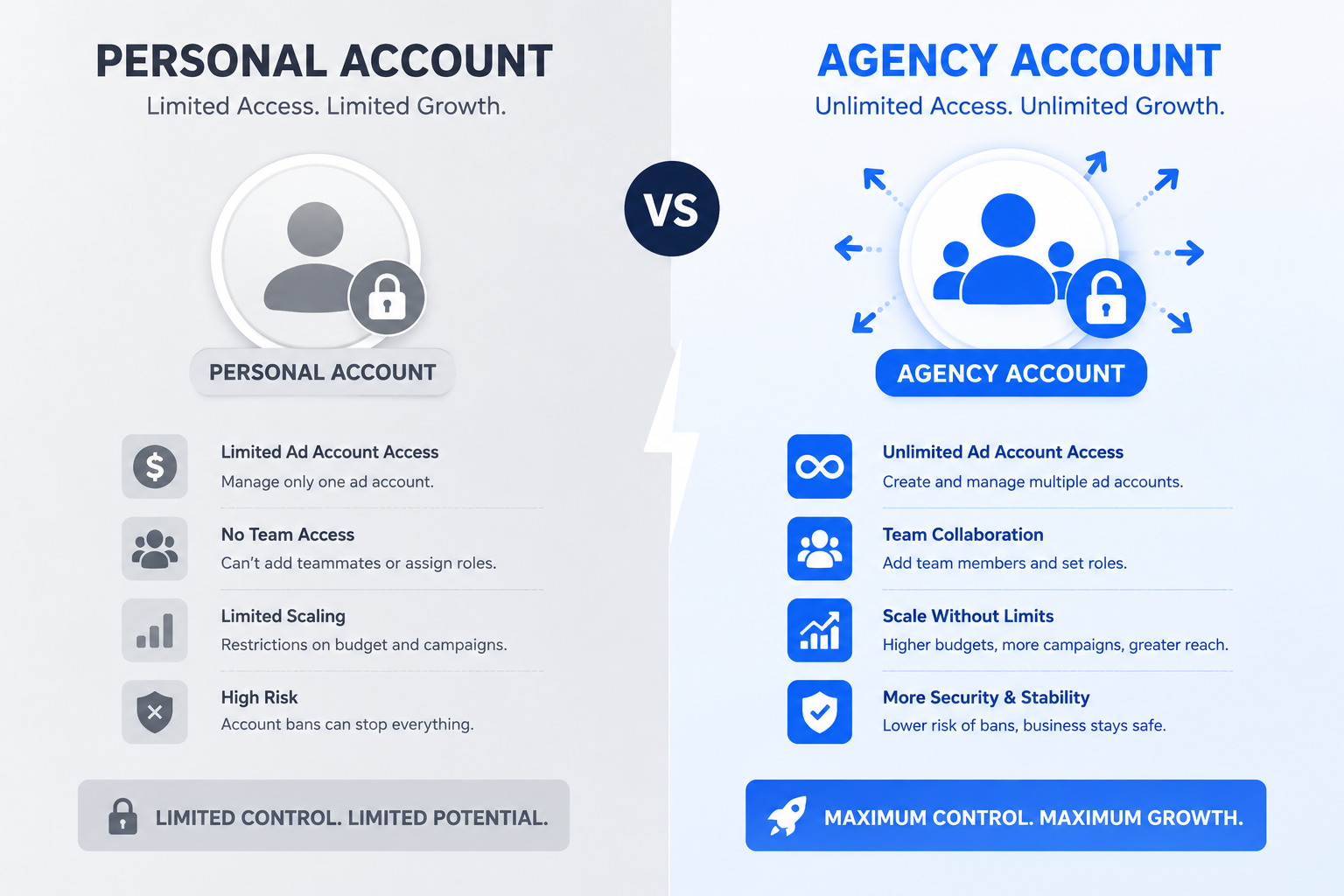
Agency Ad Account vs. Personal Ad Account
On the surface, this setup and a personal ad account look almost identical. The Ads Manager interface is the same. The reporting looks the same. The learning curve is the same.
The real difference shows up the moment something goes wrong, or the moment you try to scale spend quickly.
| Factor | Personal Ad Account | Agency Ad Account |
|---|---|---|
| Trust level with platform | Starts from zero | Inherits agency's established trust |
| Spend limits | Often capped early on | Typically uncapped |
| Ban recovery | Appeal and wait | Often replaced same day |
| Setup time for scale | Weeks of gradual warm-up | Ready to scale immediately |
| Best suited for | Small, low-risk, low-spend accounts | Agencies, media buyers, scaling brands |
Neither option is universally "better" — a small local business running a $200/month campaign rarely needs such an account. But the moment spend, risk category, or urgency increases, the gap between the two becomes very real, very fast.
Not Sure If You Need One Yet?
Get a free account health check to see if your current setup is putting your campaigns at risk.
Agency Ad Accounts by Platform
An agency ad account isn't a single, one-size-fits-all product — each major ad platform structures its version of agency-level access a little differently.
Facebook Agency Ad Account
On Meta's side, this kind of account lives inside a Business Manager that has partner-level trust with Meta. This is the most commonly requested type of the account, largely because Meta's own personal ad account restrictions tend to hit fast-scaling advertisers the hardest.
If you're specifically looking at this option, our Facebook Agency Ad Account page breaks down setup requirements and what to expect in more detail.
Google Agency Ad Account
On Google's side, the equivalent structure runs through a Manager Account (MCC) with established standing. A Google agency ad account is especially valuable for advertisers in stricter verticals, where personal accounts face heavier manual review before spend can scale.
See our Google Agency Ad Account page for platform-specific details.
TikTok Agency Ad Account
TikTok's advertising ecosystem is newer and its enforcement is often more aggressive on unverified accounts, which makes a TikTok this structure particularly useful for advertisers who've already been flagged once and don't want a repeat.
Our TikTok Agency Ad Account page covers exactly how that setup works.
Why Advertisers Use Agency Ad Accounts
The reasons advertisers move to an agency ad account tend to fall into a handful of recurring categories.
How to Choose the Right Agency Ad Account Provider
Not every this type of account provider is equally reliable, and this is where advertisers most often get burned.
A handful of checks separate a legitimate this setup from one that's just quietly passing risk on to you.
Common Myths About Agency Ad Accounts
"An the account means I can break the rules." No — this structure still has to follow every platform policy. It just starts from more established trust, it isn't a loophole around policy.
"It's the same thing as a shared ad account." Not quite. A proper agency ad account gives you your own campaign environment inside trusted infrastructure — it isn't multiple advertisers dumped into one shared account.
"Only huge agencies can access this." Plenty of solo media buyers and small brands use this kind of account today. Scale of spend matters more than company size.
"If one gets banned, I'm stuck." With a reputable provider, a banned agency infrastructure typically gets replaced quickly — that's the entire point of the model.
Risks to Watch For
An agency ad account reduces certain risks, but it doesn't remove risk entirely, and it's worth going in with clear eyes.
Providers with weak vetting can hand out access to this arrangements that are already under internal review, which shortens their useful lifespan considerably.
Sharing login credentials carelessly, running clearly prohibited content, or ignoring a provider's usage guidelines can still get even a well-trusted this type of account flagged.
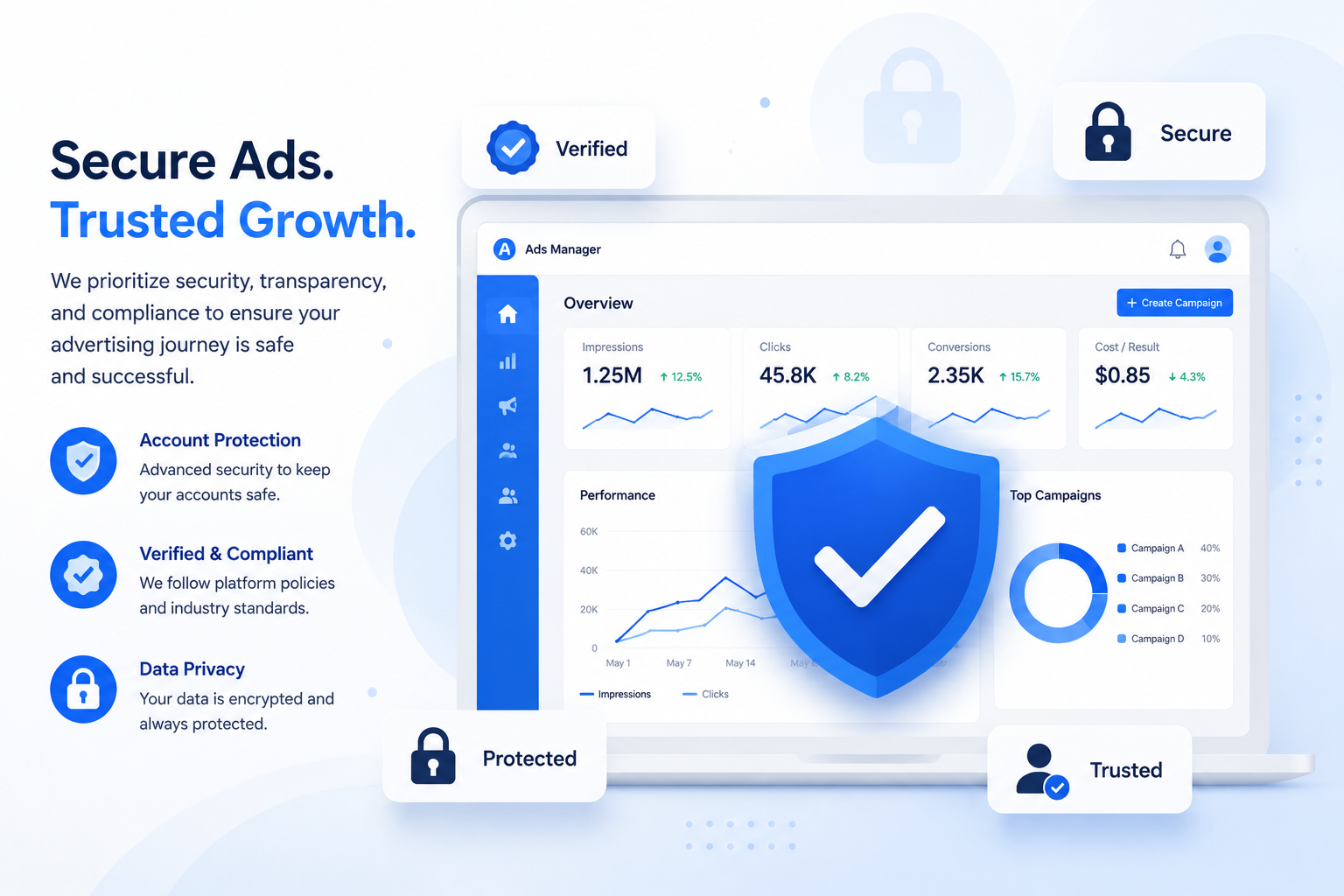
The safest approach is treating an agency ad account the same way you'd treat any business asset: follow the rules, keep documentation clean, and work with a provider who's transparent about how their accounts are sourced and maintained.
Stop Building Trust From Zero on Every New Account
Run your campaigns on verified agency infrastructure across Facebook, Google, and TikTok — with instant replacements if anything goes wrong.
Get Started With Vnox Media →Conclusion
An agency ad account isn't a trick, and it isn't a shortcut around advertising policy — it's simply a different starting point.
Instead of building trust with a platform one small campaign at a time, you're running inside infrastructure that's already earned that trust, which is exactly why such an accounts tend to scale faster and recover quicker when something goes wrong.
If you're currently running on a personal account and finding yourself capped, flagged, or nervous every time you increase budget, that's usually the signal it's time to look at an agency ad account instead.
Vnox Media provides whitelisted this kind of accounts across Meta, Google, and TikTok, with instant replacements built into the process rather than left to chance. You can also start with a free account health assessment if you're not sure whether your current setup is the actual bottleneck.
FAQs
What exactly is an the account?
It's an advertising account that runs inside an agency's established, platform-trusted Business Manager or Manager Account, instead of a standalone personal account with no history.
Is using an agency ad account against platform rules?
No — agency-level access is an officially supported feature on Meta, Google, and TikTok. It's built for agencies and partners managing ad accounts on behalf of clients.
Does this structure guarantee I won't get banned?
No account type is ban-proof. What changes is the starting trust level and, with a good provider, how quickly a banned a whitelisted account gets replaced.
How fast can I start running ads on an agency ad account?
With most established providers, setup and access can be completed the same day, since you're joining existing verified infrastructure rather than building a new account from scratch.
Can small advertisers use agency infrastructure, or is it only for big spenders?
Plenty of smaller advertisers and solo media buyers use this arrangement today — it's driven more by risk category and growth plans than by company size.
Do I need a separate agency ad account for each platform?
Yes — Facebook, Google, and TikTok each run their own agency infrastructure, so most advertisers set up a dedicated this type of account on each platform they're active on.
What should I check before paying for this setup?
Confirm the replacement policy, actual spend limits, platform coverage, and how much account access they realistically require from you before committing.