

Agency vs Personal Ad Account: Which Is Better? (2026)
Agency vs personal ad account is one of the first decisions every advertiser has to make, and most people make it by accident rather than on purpose.
You open Facebook or Google, create an account with your own login, and start running ads. It works — until it doesn't.
The agency vs personal ad account choice quietly shapes how much you can spend, how fast you can scale, and how much risk you're carrying every single day your campaigns are live.
Neither option is universally "correct." A personal account can work perfectly well for a small, low-risk business. An agency account solves problems that only show up once you start scaling.
The mistake most advertisers make is treating this as a one-time setup choice instead of a decision worth revisiting as spend, risk, and business needs change over time.
This guide breaks down the real differences in the agency vs personal ad account debate — spend limits, ban risk, support access, and cost — so you can pick the setup that actually fits your business instead of the one you happened to start with.
Already Decided Agency Is the Right Fit?
Get a Vnox Media whitelisted Facebook agency account with instant replacements built in.
Quick Key Stats
Before comparing agency vs personal ad account setups feature by feature, here's the short version of what changes.
Agency vs Personal Ad Account: What's Actually Different
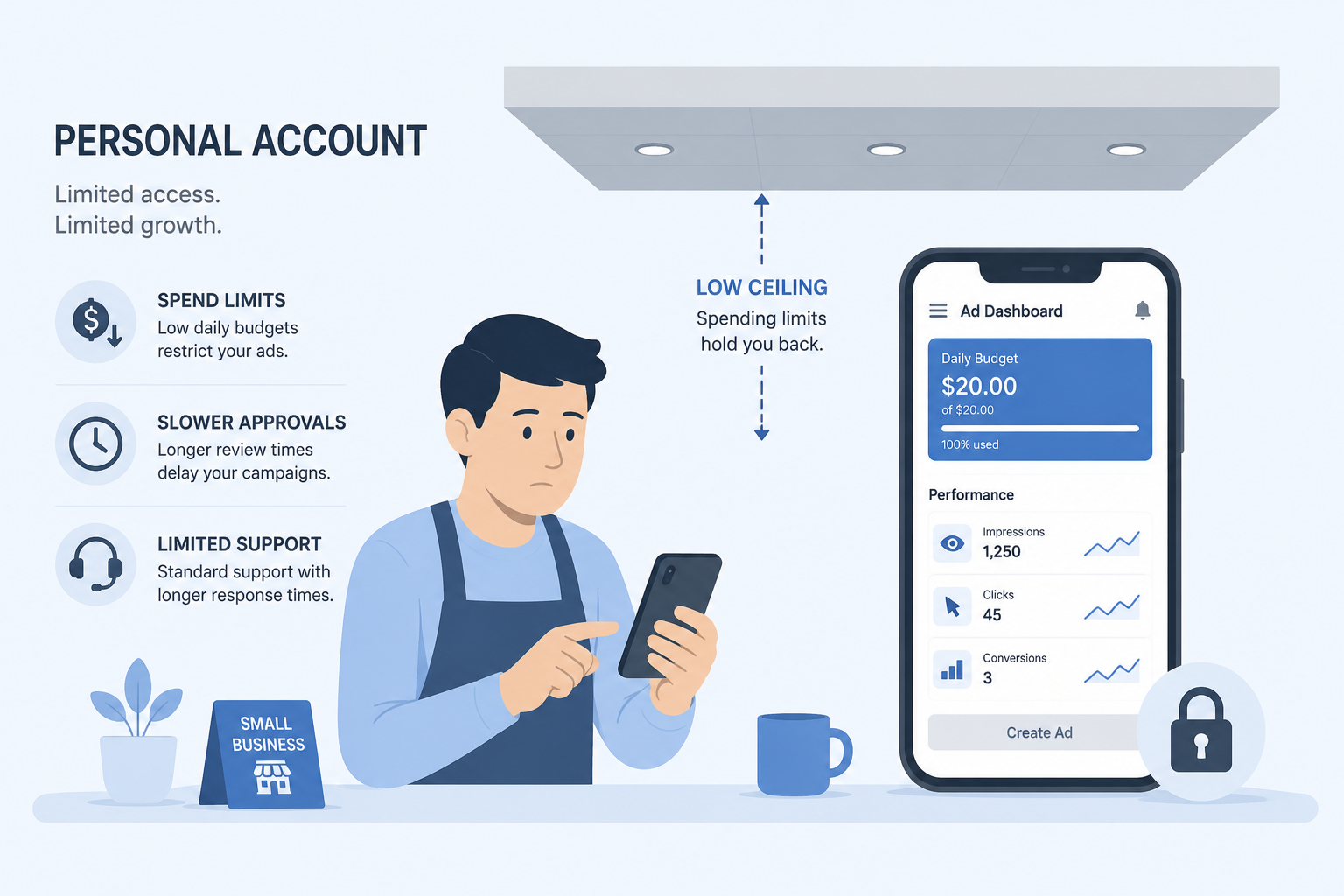
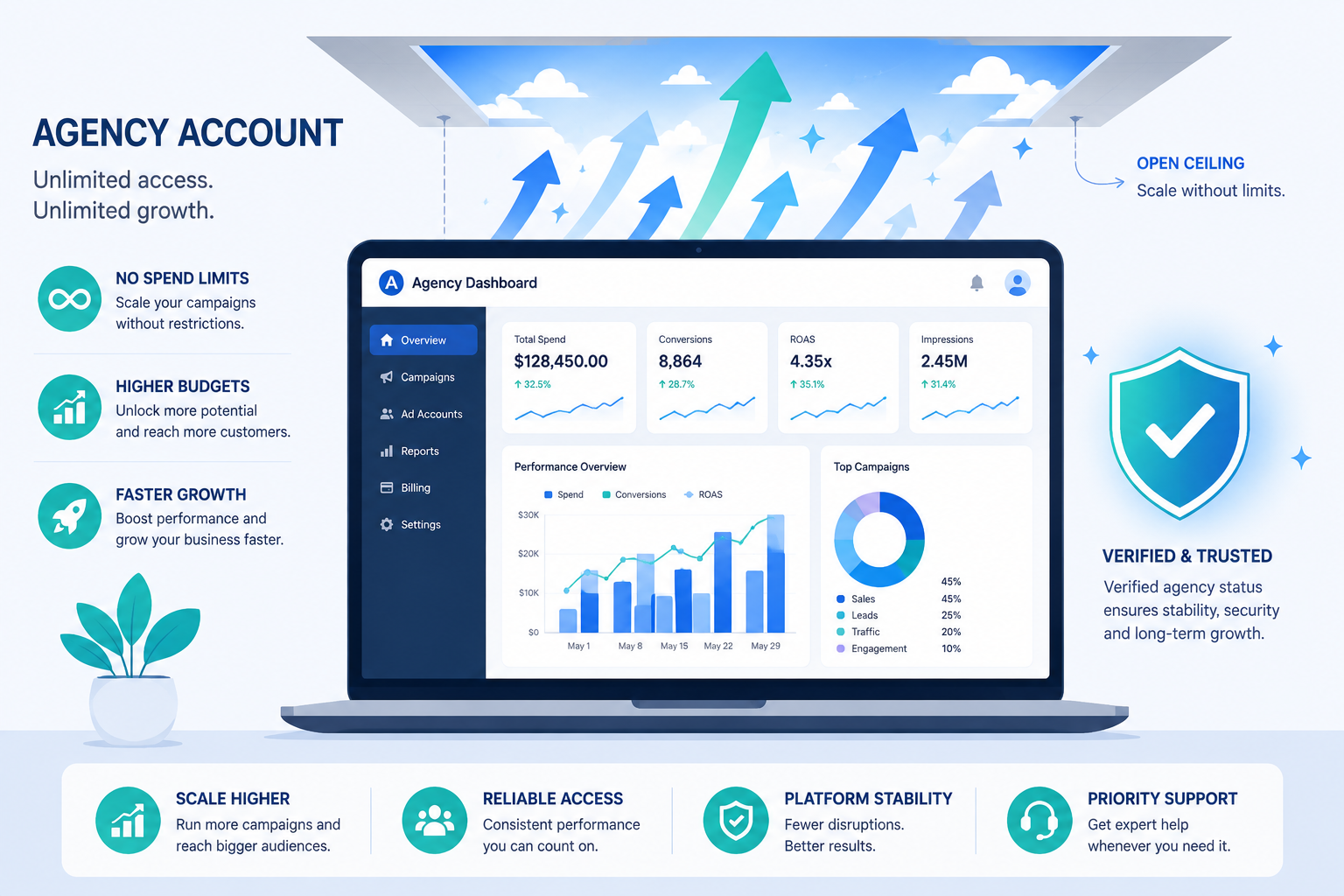
A personal ad account is created directly under your own profile. Every platform ties it to you individually, with no outside infrastructure backing it up.
An agency ad account sits under an established partner's Business Manager or Manager Account — infrastructure the platform already trusts based on a long history of compliant spend across many clients.
That single structural difference is the root of nearly every other gap in the agency vs personal ad account comparison. Trust isn't something a brand-new personal account can borrow; it has to be built from zero.
Platforms formally recognize agency-level infrastructure through partner programs — Meta's own Business Partner Directory lists agencies that have gone through this verification process directly with the platform.
A personal account, by contrast, has no formal recognition path at all. It's judged purely on its own short history, which is exactly why new accounts get treated with more caution than established ones.
Why the Agency vs Personal Ad Account Gap Keeps Growing
Enforcement systems on every major platform have become more automated, not less, over the past few years.
That shift widens the agency vs personal ad account gap further, since automated systems lean heavily on account history when deciding how much scrutiny to apply. A personal account simply has less history to lean on.
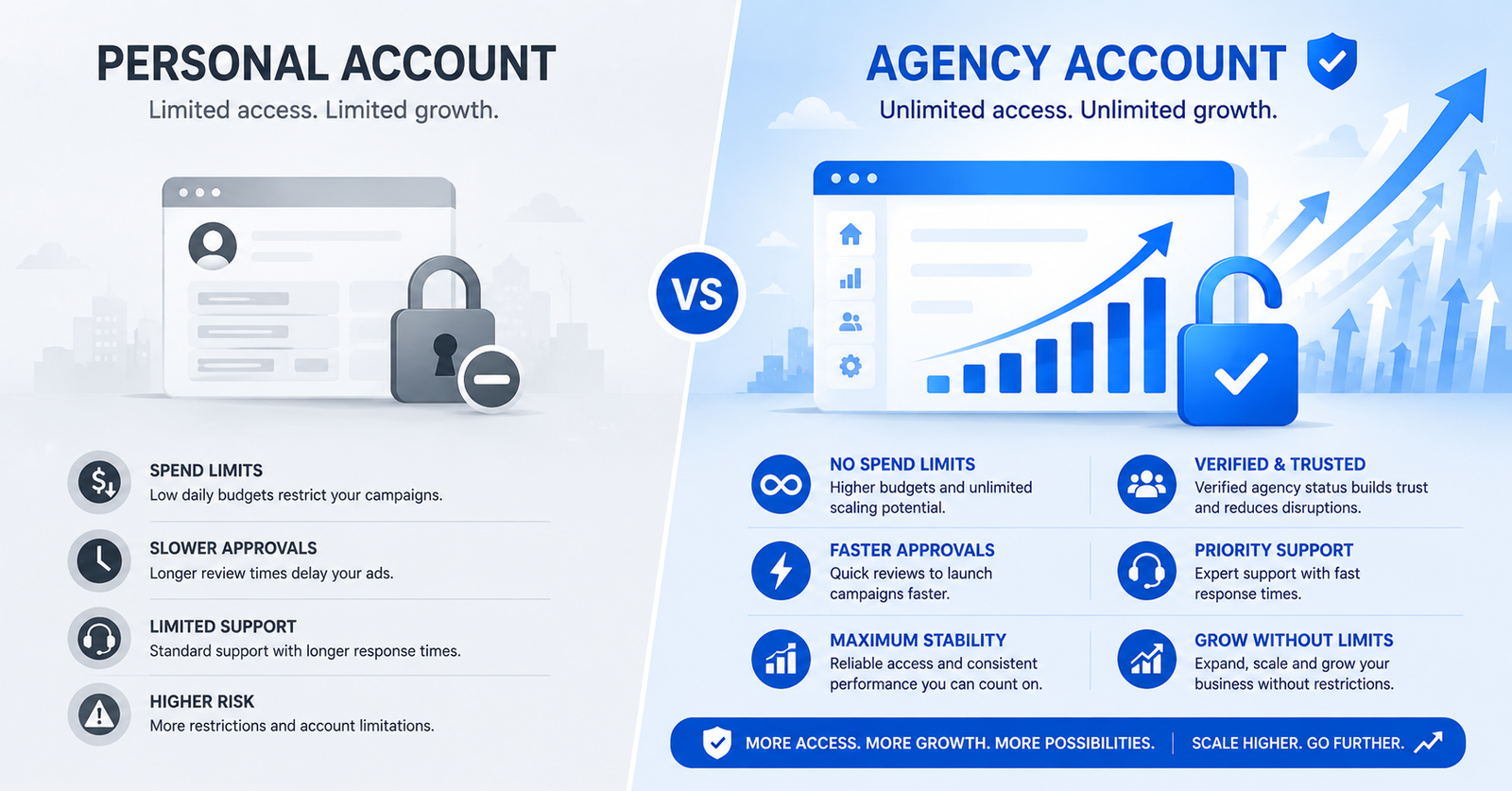
Agency vs Personal Ad Account: Side-by-Side Comparison
Here's how the two options stack up across the factors that actually affect day-to-day advertising.
| Factor | Personal Account | Agency Account |
|---|---|---|
| Ban/restriction risk | High, especially early on | Significantly lower |
| Daily spend limits | Common, especially for new accounts | Effectively unlimited |
| Warm-up period | 2–4 weeks typical | Skipped entirely |
| Recovery from a flag | Days to weeks of downtime | Often instant replacement |
| Support access | General help center only | Priority/dedicated rep |
| Monthly cost | Free to create | Management fee or spend % |
Comparing Search Campaigns Too?
Run high-intent Google campaigns without the same personal-account restrictions.
When a Personal Ad Account Still Makes Sense
The agency vs personal ad account decision isn't automatically won by the agency side. Personal accounts work fine in specific situations.
How Spend Level Changes the Agency vs Personal Ad Account Math
Budget size is often the single biggest factor in the agency vs personal ad account decision, more than industry or risk category alone.
At a few hundred dollars a month, the odds of triggering an automated review are relatively low, and the monthly fee for an agency account can outweigh the benefit.
Somewhere between a few thousand and ten thousand dollars a month, that balance flips. Spend increases start looking like the exact pattern automated systems are trained to flag on personal accounts, while the same increase barely registers on established agency infrastructure.
Beyond that range, most advertisers find the agency vs personal ad account question isn't really a question anymore — the downside risk of a frozen personal account at that spend level is simply too large to justify.
When an Agency Ad Account Is the Better Call
The agency vs personal ad account balance tips firmly toward agency once any of these apply.
How to Switch From Personal to Agency
Once the agency vs personal ad account decision leans toward agency, the switch is more straightforward than most advertisers expect — and it doesn't require abandoning existing campaigns overnight.
The Hidden Cost Most Advertisers Miss
The agency vs personal ad account decision usually gets framed around monthly fees, but the bigger cost hides elsewhere.
A personal account frozen mid-campaign doesn't just pause spend — it pauses momentum. Retargeting audiences go cold, learning phases reset, and any paused creative loses whatever traction it had built with the algorithm.
For agencies managing client budgets, that downtime carries a second cost: explaining to a client why their campaign went dark for three to five days with no clear timeline for reinstatement.
Once you price in lost momentum and client trust, the agency vs personal ad account cost comparison looks very different than a simple monthly fee suggests.
A Real-World Scenario
Consider two advertisers launching near-identical campaigns for the same product category in the same week.
The first runs on a personal account created specifically for the campaign. Within four days, an automated review flags a spend increase paired with a new billing method, and every ad pauses while the appeal sits in a queue.
The second runs through an established agency partner. The account already carries months of clean spend history across other clients, so the same spend increase barely registers as unusual. Campaigns keep running without interruption.
Neither advertiser did anything wrong. The agency vs personal ad account outcome came down entirely to which infrastructure the campaign was built on.
Mistakes to Avoid When Weighing Agency vs Personal Ad Account
Waiting for a ban to decide. Most advertisers only consider an agency account after a personal one gets restricted — by then, campaigns and revenue have already been lost.
Assuming all "agency" providers are equal. Genuine partner-level access is expensive to maintain — unusually cheap offers are a common red flag.
Running both without a plan. Splitting spend across a personal and an agency account without a clear reason just adds complexity without reducing risk.
Skip the Agency vs Personal Ad Account Guesswork
Run your campaigns on agency ad accounts built to scale with Vnox Media, across Meta, Google, TikTok, and Snapchat.
Explore Snapchat Agency Accounts →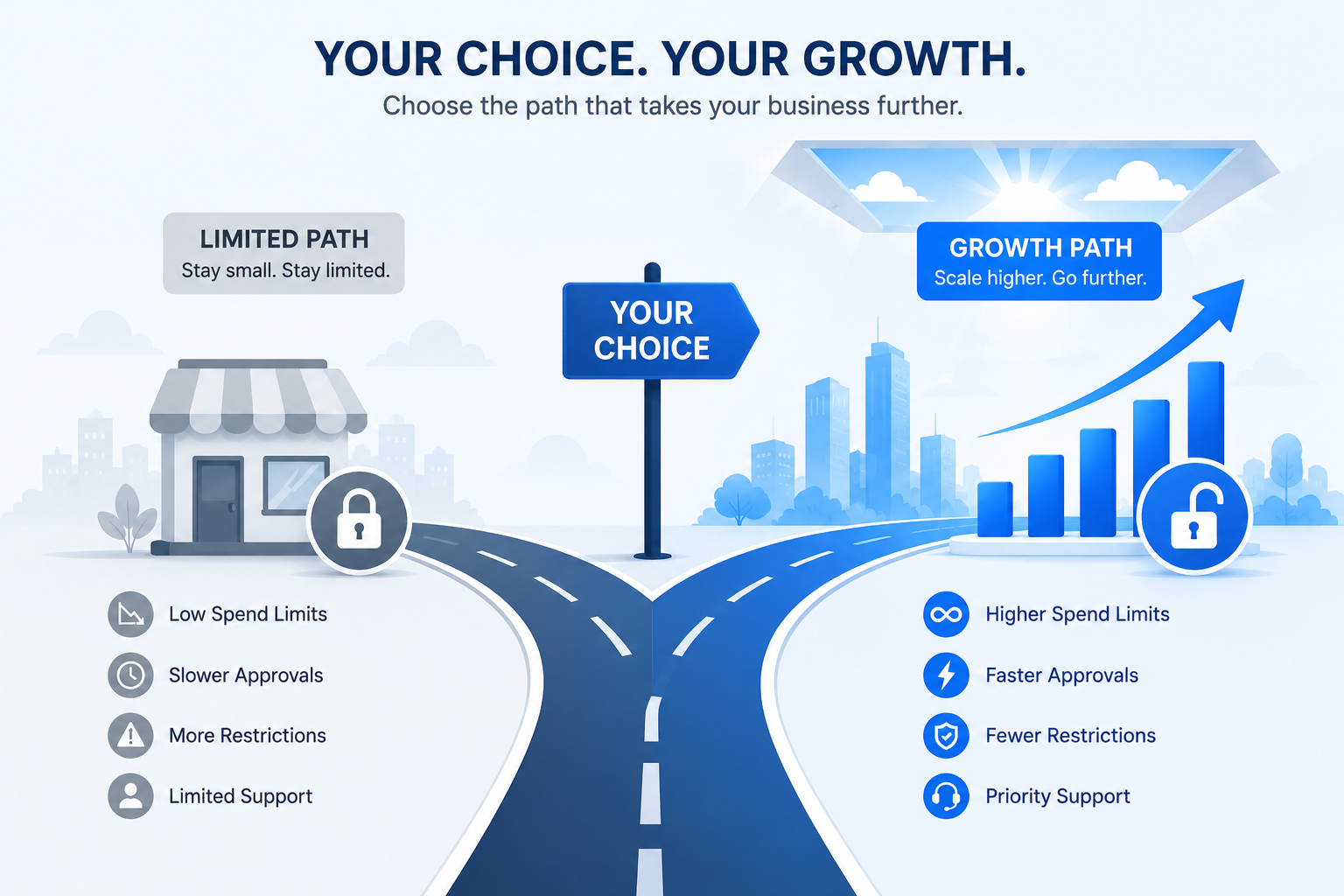
Related Reading
If you're still deciding on the agency vs personal ad account question, these two guides go deeper into each side of it.
A deeper look at what "whitelisted" status actually means and how platforms grant it.
The full breakdown of how agency accounts are structured and who manages them.
Conclusion
Agency vs personal ad account isn't a question with one universal answer — it depends on your spend, your risk tolerance, and how much downtime your business can absorb.
What's consistent is the pattern: businesses that wait until a ban forces the decision lose far more than the cost of switching early would have been.
Whichever side of the agency vs personal ad account debate fits your business today, revisit the decision as your spend grows — the right setup at $500 a month rarely stays the right setup at $50,000 a month.
Not sure which side of the agency vs personal ad account line your business falls on? A quick account health assessment can show exactly where your current setup is exposed.
You can also browse Vnox Media's full range of agency ad account solutions across every major advertising platform.
FAQs
What's the main difference in agency vs personal ad account setups?
A personal account is tied directly to your profile with no outside infrastructure. An agency account sits under a verified partner's established Business Manager, which platforms already trust.
Is an agency account always safer than a personal one?
Generally yes, in terms of ban risk and recovery speed. But it's not risk-free — serious policy violations can still affect any account type.
Can I switch from a personal to an agency account without losing data?
Often yes, if the provider supports pixel and audience data transfer — always confirm this before making the switch.
Is a personal ad account ever the better choice?
Yes — for small, low-risk spend in non-regulated categories where a few days of downtime wouldn't meaningfully hurt the business.
How much more does an agency ad account cost compared to a personal one?
Personal accounts are free to create. Agency accounts typically involve a monthly management fee or a percentage of ad spend, which usually pays for itself in avoided downtime.
Does using an agency account mean I lose control of my campaigns?
No. A reputable agency ad account setup still gives you full control over targeting, budgets, and creative — the agency only provides the underlying account infrastructure, not campaign decisions.
Can agencies also get banned, or is that only a personal account risk?
Agency accounts can technically still be flagged, but the agency vs personal ad account risk gap remains large because established providers typically offer an instant replacement account rather than leaving you to appeal alone.